
 Environment
 Transport
 Invasive Species
 Energy
 Indigenous, Minority and Lesser-Used Languages
 Creative Industries
 Social Inclusion
 Planning and Places
 Housing
 Early Years
 Drugs and Alcohol


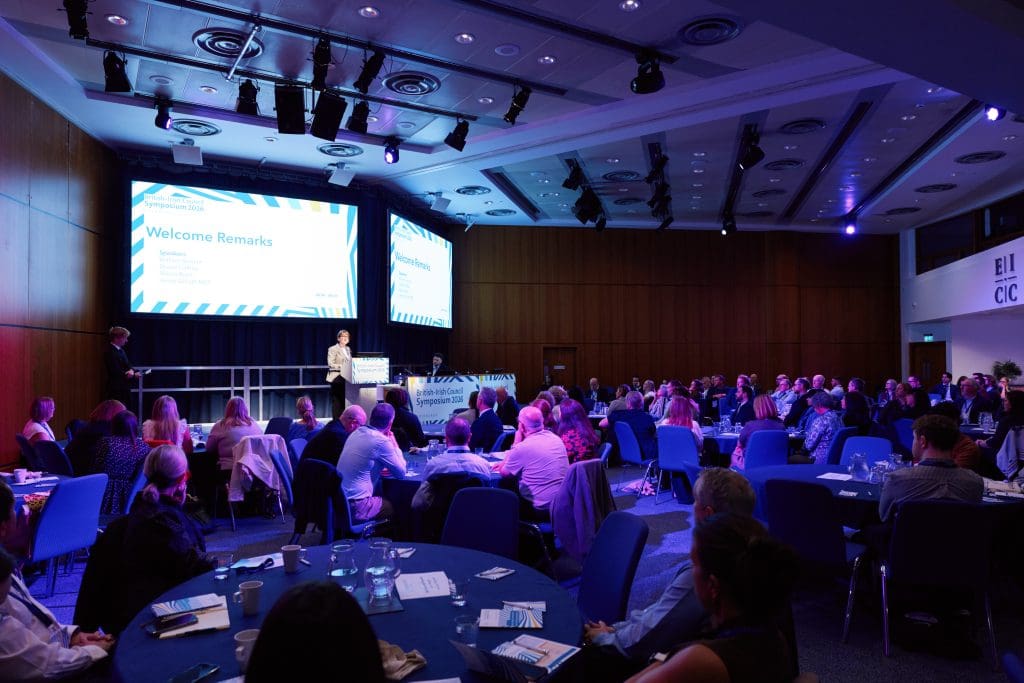
Over 150 delegates gathered in Edinburgh on Tuesday 29 September at the Edinburgh International Conference Centre for a symposium on the theme ‘These Islands: Cultivating Communities and Tackling Inequalities’, an event split across four overarching sessions showcasing the breadth of the BIC’s work.
The event was opened by the Scottish Government Deputy First Minister and Cabinet Secretary for Finance and Local Government, Jenny Gilruth MSP, and Shona Riach, Director General Exchequer, Performance and Strategy.

Reshaping Communities Through Place


The first formal session of the symposium considered the story of Belfast Grand Central Station through a range of different lenses , viewed here as a case study in reshaping communities through place-based infrastructure and regeneration.
The session began with a keynote address from John Glass, Director of Infrastructure & Projects at Translink. John’s address was called ‘Connecting People, Places and Opportunity: The Belfast Grand Central Story.’
This address was followed by parallel workshops on Traffic Management from James Redmond, Director of Transport Planning, Modelling and Data Analytics within the Department for Infrastructure in Northern Ireland; and Accessibility and Place, presented by Louise Doyle, Station Manager, Belfast Grand Central Station, and disability advocate Michael Lorimer head of the Inclusive Mobility and Transport Advisory Committee (IMTAC) Secretariat.
The session concluded with a panel discussion that explored the wider community, planning, and accessibility considerations linked to the project. This discussion brought all previous panellists together, where they were joined by Katheryn McFerran, Director of Regional Planning Policy and Casework at the NIE Department for Infrastructure, and Gary Marshall, Senior Infrastructure Stakeholder Engagement Manager with Translink Major Projects. The panel was chaired by Sian Kerr, co-chair of the BIC Transport Work Sector.
Circularity and Sustainability


The session explored place-based and community approaches to achieving the energy transition through a renewable energy and circular economy lens.
Chris Stark, Head of the UK Government’s Clean Power Mission in DESNZ, opened with his keynote address ‘Bringing the Energy Transition Home’. Chris spoke about the importance of shifting discourse away from public energy deployment to public participation, the work of GB Energy in supporting communities and local authorities in taking ownership of energy projects, as well as the symbolic importance of GB Energy’s HQ being based in Aberdeen.
A panel session then followed exploring ‘Achieving Circularity and Sustainability at the Local Level’, led by Nicola Hopley, Chair of the Environment Work Sector. Chris was joined on stage by Dr. Rachel Lombardi, Chief Executive of International Synergies, an industry leading organisation on industrial symbiosis and the circular economy in action; Calum MacDonald, founder of the Point and Sandwick Trust – the UK’s largest community-owned onshore wind farm situated on the Isle of Lewis; and Elaine Brown, Chief Executive of the Edinburgh Remakery – an award-winning charity based in Leith which specialises in repair and reuse, in addition to delivering several community outreach initiatives.
Panellists reflected on the value of involving communities, both individuals and businesses, in circular and sustainable initiatives and the importance of communities seeing and feeling the tangible benefits.
Supporting a Healthy Society
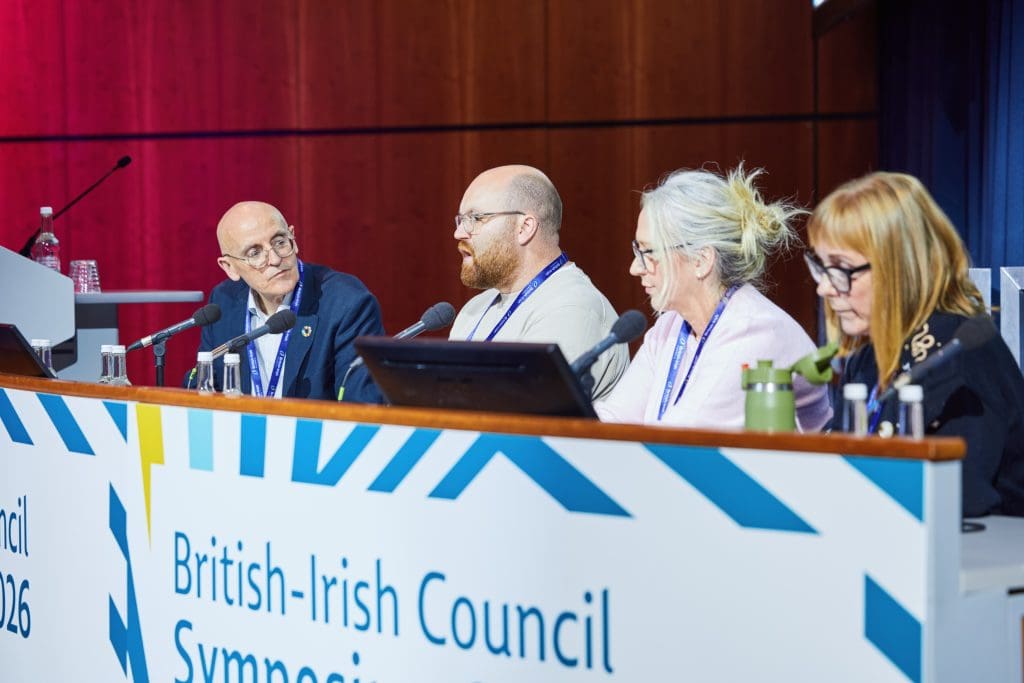


During the third session the Symposium turned its focus to both the early years sector, and health, wellbeing, and certain support pathways within communities.
The opening panel discussion explored how perinatal and family supports can be strengthened for women with substance use challenges where we were joined by leading health experts and those with lived experience. Featured on the panel were Ellen Crushell, Deputy Chief Medical Officer at the Department of Health, Ireland; Dr Aisling Sheehan, National Lead of Alcohol and Mental Health and Wellbeing Programmes at the Irish Health Service Executive; Professor Maeve Eogan, Obstetrician and Gynaecologist at the Rotunda Hospital, Dublin, Ireland; and Sharon Graham, Research Assistant and the Lead for Lived Experience at Glasgow University within the Child and Adolescent Mental Health team.
This was followed by parallel workshops focusing on screen time and post custody recovery supports respectively:
Dr Katie Daubney, developmental psychologist and neuroscientist at the Institute for the Science of Early Years (ISEY), University of East London, led a workshop exploring healthy digital experiences in the early years titled: Not All Screen Time is Equal: The Importance of Supporting Healthy Digital Experiences in the Early Years. Dr. Daubney spoke about ISEY’s research on the neurological impacts of screen time on young children, as well as a range of different scenarios where screen time can have a negative and positive impact on child learning and brain development.
Alongside this, leading academics from Ireland and Scotland participated in a panel exploring recovery and reintegration support for individuals leaving custody. The discussion raised the many complex challenges individuals face in this context, and emphasised the importance of joined-up, evidence-informed and person-centred approaches that respond to the needs of those leaving custody. Chaired by Professor Diarmuid O’Donovan, Director of National Health Improvement with the Irish Health Service Executive, the panel included Elaine Dunne, Healthy Prisons Lead for the Irish Prison Service; Lisa Miller, operational lead of Scottish Recovery Consortium’s (SRC) Prison Recovery Development Team who drew on her lived experience, and Dr John McGhee, a researcher from both the University of Glasgow and University of Edinburgh, whose work focuses on the intersections of health, inequality, and the criminal justice system.
Culture and Heritage


The final session of the symposium explored the role of culture, heritage, language and the creative industries in supporting identity, community and inclusion.
It commenced with two parallel workshops.
In one room was a panel discussing ‘Pride in Place’, focussing on the impacts of Bergerac in Jersey and An t-Eilean in the Isle of Lewis, featuring Ben Bickerton and Phil Trethowan of BlackLight TV, Bill MacLeod of MG Alba and Arabella Page Croft of Black Camel. The panel, which was chaired by Chris Kelleher, Chair of the Creative Industries Work Sector, discussed how the productions had provided employment and career opportunities in Jersey and the Isle of Lewis, the response from local residents, the importance of embedding the production teams in Jersey and the Isle of Lewis, as well as the wider economic benefits provided by the productions, including increased tourism.
In parallel, a panel took place exploring the role of ‘Minority Languages in the Age of AI’, featuring Professor Will Lamb of the University of Edinburgh, Gruff Prys of Bangor University, Dr Brian Ó Raghallaigh of Dublin City University. Chaired by Niall Bartlett, this discussion considered the associated opportunities and challenges Indigenous, Minority and Lesser-used (IML) languages face amid rapidly developing large language models, and its impacts on translation, education and minority language.
Freelance Director and Producer, Liz MacBain, then addressed delegates on the BIC’s Celtic Exchange Programme, which – with the support of the Welsh Government – has been running the past two years, with programmes taking place in the Outer Hebrides in 2025 and Belfast in 2026. Liz spoke about the positive feedback given by young participants from across the island of Ireland, Cornwall, Scotland, Wales and the Isle of Man, and the value of breaking down silos and supporting a network for young, language creatives from across these islands.
The symposium programme formally concluded with the final panel exploring ‘Breathing Life Into Third Places: Language and Intangible Cultural Heritage Policy’, featuring Wyn Roberts, Chair of Tyn’ Llan, a community-owned pub in Llandwrog, North Wales, Dr Esbjörn Wettermark of the University of Sheffield’s School of Languages, Arts and Societies, Bláithín Mhic Cana, an award-winning singer, educator and language activist from South Armagh, and Steve Byrne, Scottish singer, folklorist and cultural advocate as Chief Executive of TRACS (Traditional Arts & Culture Scotland). The panel was led by Llŷr Gwyn Lewis, Chair of the IML Languages Work Sector.
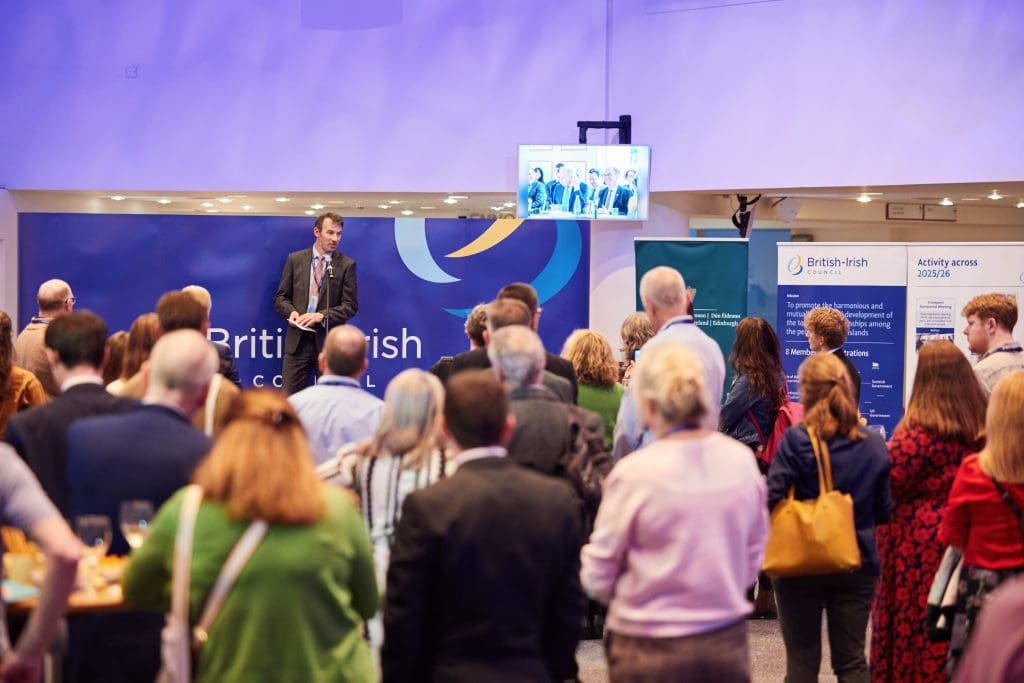

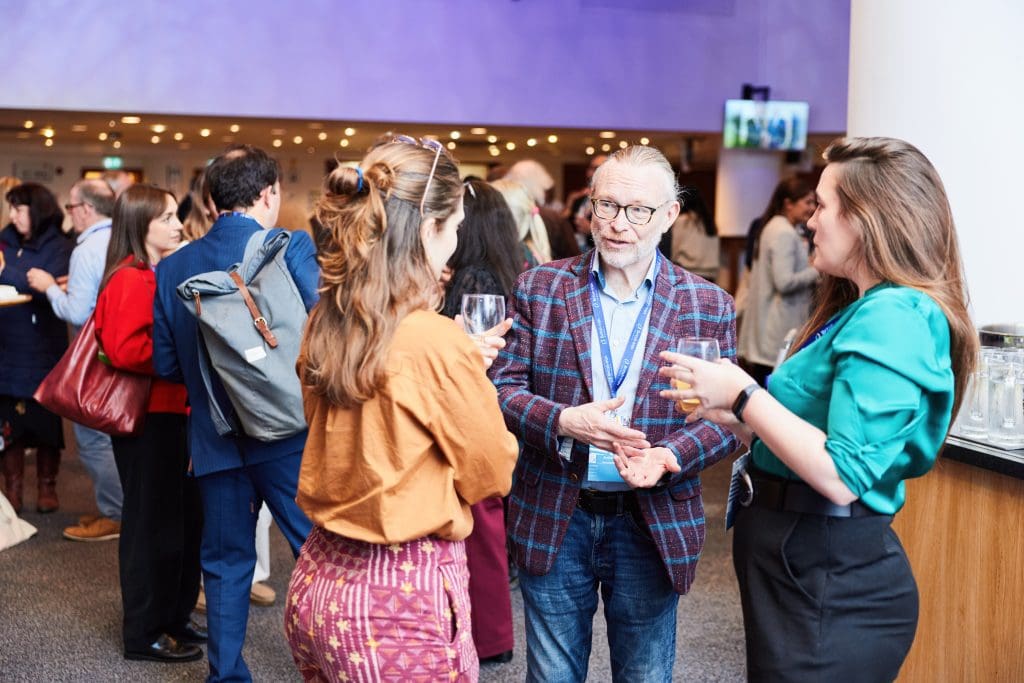
Following the Symposium, the Consulate General of Ireland in Edinburgh hosted a networking event with additional attendees joining from the Network of Academics for Irish and Scottish Engagement (NAOISE).
On 2 and 3 September 2026, the Scottish Government hosted the British-Irish Council (BIC) Indigenous, Minority and Lesser-Used (IML) Languages Work Sector in Stornoway, on the Isle of Lewis. The busy two-day programme was an excellent opportunity to gather officials from the BIC’s Member Administrations for intensive discussions, fascinating presentations and a series of thought-provoking project visits across the island
The specific focus of this Work Sector visit was on the social use of IML Languages particularly amongst young people and in workplaces. The visit was an opportunity to explore the economic, housing, cultural, and social enterprise initiatives being used to drive and promote Gaelic language use right across the area. The programme also covered linguistic infrastructure and culture.


During the first day of the visit, the delegation took time to travel around the region to meet with the following organisations:
- MG ALBA, Scottish Government’s Gaelic broadcasting stakeholder. Responsible for providing BBC ALBA and a range of other Gaelic language services.
- Comhairle nan Eilean Siar’s Gaelic team took the group to Ness in the north-west of Lewis. One of the communities with the highest proportions of Gaelic-speakers in Scotland where the group visited different organisations in the area in order to get a sense of a modern day rural, Gaelic community.
- Comunn Eachdraidh Nis, a historical society. Beyond being a museum and heritage centre, it is a vital social enterprise which provides a range of services within the community and which places Gaelic at the centre of its work.
- Sgìre Cànain Shònraichte nan Eilean Siar – the Western Isles Area of Linguistic Significance
- Taigh Dhonnchaidh, a community music school
- Carthannas Nis,a local charity.
- Urras Oighreachd Ghabhsainn, a community landlord for Ness.


The second day saw the delegation engaging with local enterprises, arts, and cultural initiatives across the North of the Isle of Lewis:
- Highlands and Islands Enterprise (HIE) an economic development agency for the north of Scotland., and the Social Enterprise Academy which provides entrepreneurial training.
- Alba FA is Scotland’s Gaelic national football team. Using football as a medium to encourage young people to make greater use of the language. In recent years they have organised contests with other minority language communities in Europe as well as engaging with Nova Scotia’s Gaelic community. For 2028 they hope to organise a minority language tournament to run in parallel to the UK & Ireland’s co-hosting of EURO 2028.
- Aiteal a Gaelic software start-up sponsored by the Scottish Government and the University of Edinburgh. They aim to increase the quantity of publicly accessible Gaelic language data that can be used to develop Gaelic digital technology.
- e-Sgoil an e-learning service established by Comhairle nan Eilean Siar in 2016, initially created to tackle teacher recruitment difficulties in the Western Isles
- An Taigh Cèilidh a new social enterprise in Stornoway. A café, shop and cultural centre which makes Gaelic a central part of its business. Co-founded by a native Welsh speaker, it provides a commercial space for Gaelic use in Stornoway, creating Gaelic medium employment for young speakers.


The British-Irish Council was delighted to sponsor the 47th Celtic Media Festival in Belfast.
Following the success of the 2025 Celtic Exchange Programme, the British-Irish Council (BIC), in partnership with the Welsh Government and MG ALBA, supported the ‘Celtic Code’ in Belfast this Spring – an initiative which brought young language creatives from across Ireland, Northern Ireland, Scotland, Wales, the Isle of Man, and Cornwall together to meet, network, and learn new skills. They created new content in their indigenous languages, exploring and showcasing the rich linguistic and cultural heritage of these islands.
This year is the British-Irish Council’s sixth year of partnership with CMF. Together, BIC and CMF share a commitment to support the use of Indigenous, Minority and Lesser-used (IML) languages in the creative arts and in broadcasting.
The initiative gave the participants the opportunity to meet with like-minded individuals, celebrate their shared Celtic cultures and languages, and learn from creative industries professionals on how they built their careers in the place they call home whilst using their indigenous language. A video showcasing the participants undertaking the Celtic Code Challenge can be viewed below.
You can also see what the participants got up to throughout the challenge via the following Instagram account @celticcode2026 and YouTube channel @TheCelticCollective-r7y.
At this year’s CMF in Belfast, participants of the Celtic Exchange Programme put their skills and knowledge to the test by creating multi-lingual creative content by interviewing CMF attendees and award nominees, and by filming and editing their pieces. Finally, a film created by the students showcasing their time participating in the Celtic Code Challenge was shown across multiple screens and platforms throughout the festival.
On 8 and 9 October 2025, the Welsh Government hosted the British-Irish Council (BIC) Indigenous, Minority and Lesser-Used (IML) Languages Work Sector in Caernarfon, North Wales. The busy two-day programme was an excellent opportunity to gather officials from the BIC’s Member Administrations for intensive discussions, fascinating presentations and a series of thought-provoking project visits.
The specific focus of this Work Sector visit was on the Social Use of IML Languages particularly amongst young people and in workplaces. The visit was an opportunity to explore the economic, housing, cultural, and social enterprise initiatives being used to drive and promote Welsh language use right across the area. The programme also covered linguistic infrastructure and culture.
During the first day of the visit, the delegation took time to travel around the region to meet with the following organisations:
- Megan Tanner, Head of Visitor Experience and Business Development, Cadw
- Iwan Hywel, Chief Officer, Menter Iaith Gwynedd
- Anwen Davies, ARFOR Programme Regional Manager, Gwynedd County Council
- Leah Cunningham-Edge, Commissioning and Quality Officer, Adnodd
- Richard Wyn Huws, Gwinllan Pant Du
- Ben Gregory, Community Hub Manager, Yr Orsaf
- Tŷ Gwyrddfai with Sion Hughes, Director of Policy and Delivery of Adra (Tai) Cyfyngedig
- Robat Jones, Director, Bragdy Lleu


The second day of the visit focused on the town of Caernarfon where the delegation engaged with local enterprises, arts, and cultural initiatives including:
- Nia Arfon (Chief Executive) and Gwion Llewelyn (Senior Development Manager) of Galeri
- Meinir Llwyd Roberts, Director Canolfan Gerdd William Mathias Music Centre
- Delyth Wyn, Producer and Head of North Wales Operations, Tinopolis .


Finally, the IML Languages Work Sector delegation were delighted to have the opportunity to meet with Mark Drakeford MS, Cabinet Secretary for Finance and Welsh Language, where they heard about his personal language journey, as well as his priorities in delivering the Welsh Government’s Welsh Language strategy: Cymraeg 2050 – aiming to reach a million Welsh speakers and double daily language use by 2050.


This year’s Celtic Media Festival (CMF) in Newquay, Cornwall, is the British-Irish Council’s (BIC) fifth year of partnership with CMF. Together, BIC and CMF share a commitment to support the use of Indigenous, Minority and Lesser-used (IML) languages in the creative arts and in broadcasting.
Earlier this April, MG Alba hosted a Celtic Exchange programme of young language speakers in the Hebrides, off the western coast of Scotland. Participants involved in the exchange included young creative speakers of Irish, Scots Gaelic, Welsh and Cornish. The initiative gave the participants the opportunity to meet with like-minded individuals, celebrate their shared Celtic cultures and languages, and learn from creative industries professionals working in the Hebrides on how they built their careers in the place they call home.


The exchange was a joint initiative of the BIC, the Welsh Government and MG ALBA, with the support and participation of Cornwall Council and the University of Galway.
A video showcasing the exchange can be viewed here.
At this year’s CMF, the BIC sponsored a panel discussion about the Celtic Exchange programme. The panel was called ‘Celtic Exchange – Supporting the Next Generation in Creative Media’ and was chaired by Siwan Haf, Series Producer at Cwmni Da. Panellists included:
- Liz McBain, Coordinator and Mentor at MG Alba;
- Isibéal Ní Cheallaigh, Celtic Exchange Participant and
- Jowan Nute, Celtic Exchange Participant.
Panellists talked about their experiences in the Hebrides, what they learnt from each other, the content they created and the creative professionals they met along the way. They also discussed how the exchange has helped inspire them in their future careers, as well as the potential for the Celtic Exchange programme to establish a network of young IML language speakers from across these islands.


In April, ahead of the Celtic Exchange programme, Mark Drakeford, Cabinet Secretary for Finance and Welsh Language, Welsh Government expressed:
“We’re pleased to give Welsh Government support for this innovative Celtic Exchange programme which will create opportunities for talented young people to work together for the first time. It will give them an insight into other minority languages across these isles, which will no doubt affect how they see the world and how they live and work within the creative industries.
These experiences are invaluable in broadening horizons and building connections. This partnership shows our shared commitment to sustaining our languages, strengthening cultural connections across our nations and helping people to work where they choose to live.”
Catriona Logan, Celtic Media Festival director, also remarked on the Celtic Exchange programme:
“We were delighted to hear that the British-Irish Council made practical strides in supporting young people with Indigenous, Minority and Lesser-Used languages in the media, following on from Celtic Media Festival 2024. The ambition of the Celtic Exchange Programme is incredibly impressive and we look forward to welcoming the British-Irish Council back to this year’s Celtic Media Festival.”

We were delighted to continue our partnership with the Celtic Media Festival (CMF) again this year in Cardiff where people creating media content in indigenous, minority & lesser-used languages come together.
This year, the British-Irish Council sponsored a panel session on 5 June entitled: Livelihoods and Language: Making Your Living, Where You’re Living, focusing on enabling people to use iml languages creatively in their own communities to create dynamic media content.
The session, chaired by Chief Executive of Rondo Media, Gareth Williams, included the following panellists:
- Irial Mac Murchu, CEO and Owner of Nemeton;
- Liz Macbain, Coordinator and Mentor at MG Alba;
- and Mark Trevethan, Pincupal Culture Lead at Cornwall Council.
The Chair and panellists talked about their about their experiences in growing the media industry outside its traditional hubs and supporting young people to succeed at home.